 Image 1 of 1
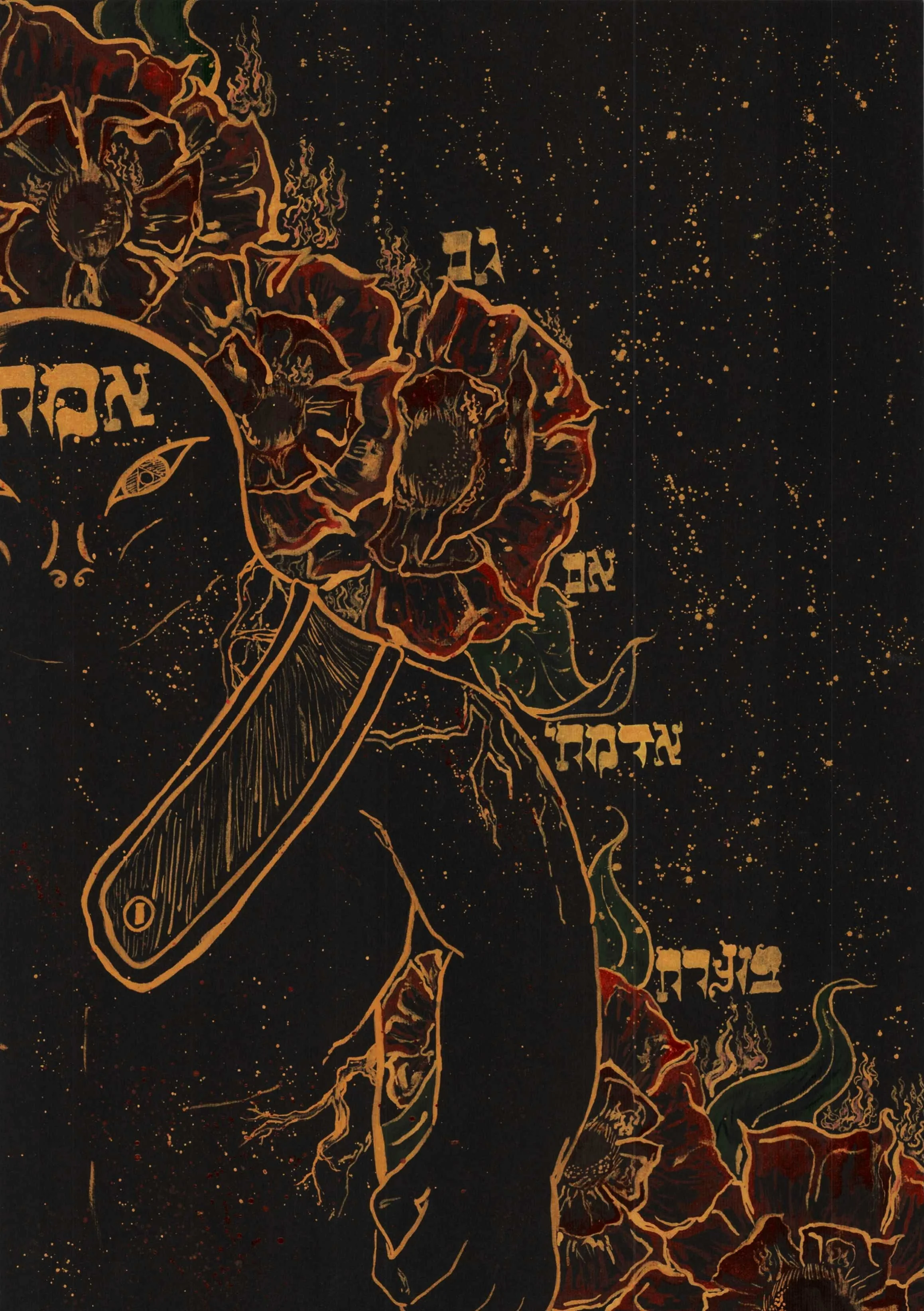
This piece, Protector of the Land, from the series From Darkness, the Embers of Hope, is a product of nearly two uneasy years of trying to transmute the trauma of October 7th through a creative lens. In particular, this work aims to explore the concept of protection and safety in our homeland in the aftermath of the worst attack in our history - utilizing the image of the Golem. The multiple attributes of the Golem in this context offer a kaleidoscopic view into the theme: What happens to a Golem, clay of flesh, when scorched through the kiln of war? What protection can the Golem offer, when it too, is a piece of “technology” made by man? Does the spirit of protection take on a life of its own as a national concept, much like the Golem takes on a life of its own after its creation? How does the idea of seeking external protection play a role in a state-making project whereby we take the responsibility of protection upon ourselves? Does the Golem serve not only to keep the invader outside the walls, but to keep us within?
And ultimately, how can we reapply the image of the Golem, which exists through hundreds of years of Jewish imagination, into our contemporary rekindling of an inherent visual culture as a nation reborn in our land? Perhaps most importantly, this piece encourages a hope for a better tomorrow, with the Golem standing stalwart in the service of Am Yisrael, with Kalaniyot (anemone flowers) blooming around it, signifying a nation that will return and rise from the ashes and rebuild as a unified people
This piece, Protector of the Land, from the series From Darkness, the Embers of Hope, is a product of nearly two uneasy years of trying to transmute the trauma of October 7th through a creative lens. In particular, this work aims to explore the concept of protection and safety in our homeland in the aftermath of the worst attack in our history - utilizing the image of the Golem. The multiple attributes of the Golem in this context offer a kaleidoscopic view into the theme: What happens to a Golem, clay of flesh, when scorched through the kiln of war? What protection can the Golem offer, when it too, is a piece of “technology” made by man? Does the spirit of protection take on a life of its own as a national concept, much like the Golem takes on a life of its own after its creation? How does the idea of seeking external protection play a role in a state-making project whereby we take the responsibility of protection upon ourselves? Does the Golem serve not only to keep the invader outside the walls, but to keep us within?
And ultimately, how can we reapply the image of the Golem, which exists through hundreds of years of Jewish imagination, into our contemporary rekindling of an inherent visual culture as a nation reborn in our land? Perhaps most importantly, this piece encourages a hope for a better tomorrow, with the Golem standing stalwart in the service of Am Yisrael, with Kalaniyot (anemone flowers) blooming around it, signifying a nation that will return and rise from the ashes and rebuild as a unified people