 Image 1 of 1
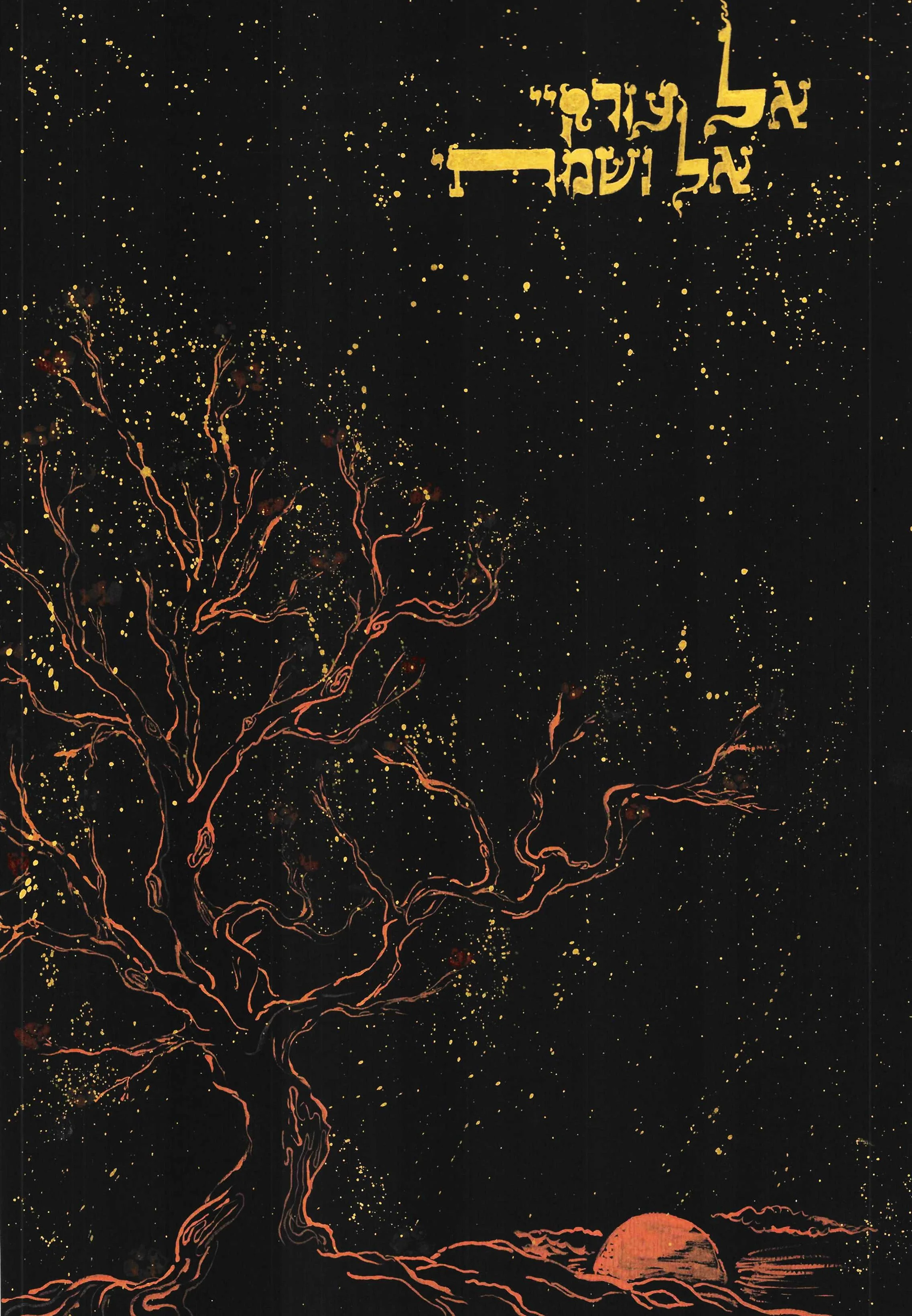
Japanese Watercolor and Gold Leaf Paint on Van Gogh Paper, 30 x 40 cm
Series: From Darkness, the Embers of Hope, Summer 2025
This piece, My Veins, My Soul from the series From Darkness, the Embers of Hope, is meant to explore the idea of abandonment and the inherent loneliness of going through a traumatic experience such as war. I thought long and hard about the ideal image of the scars of conflict, but one that implies a tomorrow along the horizon as well - and came to a conclusion based both in aesthetic thought, and an old memory.
When I worked at an archaeological dig site alongside the Hebrew University years ago, I would stop to have coffee before my early shift at the Mitzpe HaMasuot (The site of an ancient lookout post). On clear days from the cliff, you could see the desert mountains stretching as far as the eye could see, and the Dead Sea peaking out from along the sandy hills, sparkling with the light of the rising sun - and among it all, a lone tree growing among the dusted, sun-scorched earth. I snapped a photo of it that I’ve since lost, and painted this image (which I’ve reposted here), to which someone I knew told me, “Well, it’s a self-portrait, isn’t it? That tree is you” - a compliment, I hoped. A single tree amidst the darkness can be a stalwart representation of resilience, surviving the flames of destruction - but inherent to the tree, is the hope of blooming again. A single tree can become an orchard, a single seed, a garden. So too, the roots of the tree are the veins of the man it mirrors, the body, a receptacle for the soul.
Japanese Watercolor and Gold Leaf Paint on Van Gogh Paper, 30 x 40 cm
Series: From Darkness, the Embers of Hope, Summer 2025
This piece, My Veins, My Soul from the series From Darkness, the Embers of Hope, is meant to explore the idea of abandonment and the inherent loneliness of going through a traumatic experience such as war. I thought long and hard about the ideal image of the scars of conflict, but one that implies a tomorrow along the horizon as well - and came to a conclusion based both in aesthetic thought, and an old memory.
When I worked at an archaeological dig site alongside the Hebrew University years ago, I would stop to have coffee before my early shift at the Mitzpe HaMasuot (The site of an ancient lookout post). On clear days from the cliff, you could see the desert mountains stretching as far as the eye could see, and the Dead Sea peaking out from along the sandy hills, sparkling with the light of the rising sun - and among it all, a lone tree growing among the dusted, sun-scorched earth. I snapped a photo of it that I’ve since lost, and painted this image (which I’ve reposted here), to which someone I knew told me, “Well, it’s a self-portrait, isn’t it? That tree is you” - a compliment, I hoped. A single tree amidst the darkness can be a stalwart representation of resilience, surviving the flames of destruction - but inherent to the tree, is the hope of blooming again. A single tree can become an orchard, a single seed, a garden. So too, the roots of the tree are the veins of the man it mirrors, the body, a receptacle for the soul.